
The daily road
One road per calendar date, identical for every player, and a new one at your own midnight. Road #1 opened on 8 October 2026, and every road since has a number.
Each road is generated the way real roads are surveyed: straights, and curves that are entered and left through clothoids — bends whose curvature ramps up smoothly instead of arriving all at once. That matters in a game about smoothness: on a clothoid the steering a bend needs grows gently from zero, so a smooth line through every corner always exists.
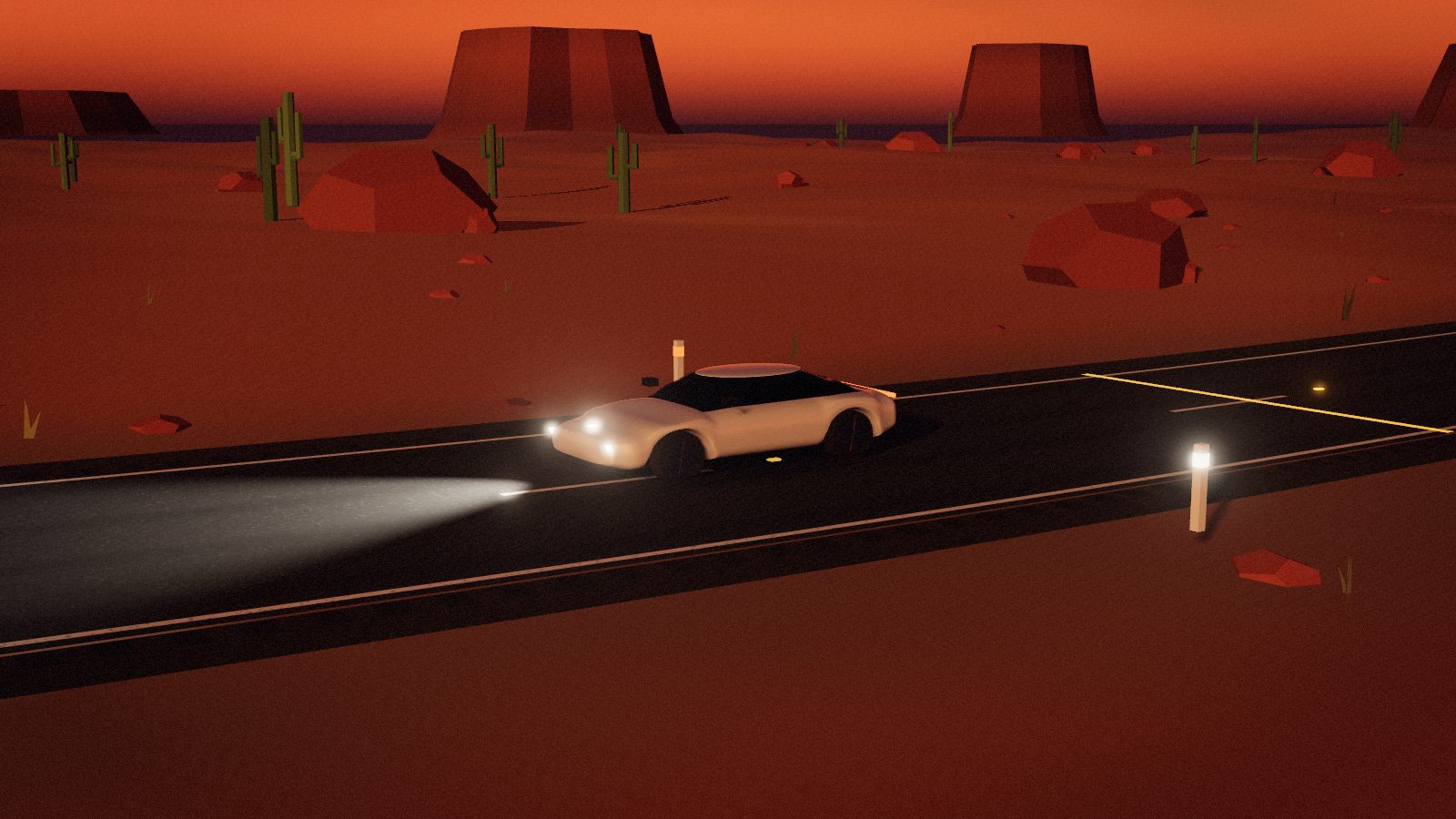
- A country every day. Each road is set in one of the 61 countries the Smooooth Operator app has courses in — countries with more courses come up more often — and in the kind of landscape that country's roads run through: alpine passes, forest and highland roads, coast roads, desert, and India's hairpin ghats. The road itself is generated, never a real one.
- That country's rules. The side of the road traffic keeps to, speed signs in mph or km/h, and the country's own sign and road-marking styles — yellow centre lines in the Americas, blue numerals in Japan.
- Three times of day. Dusk, night or dawn.
- Some days it rains. A wet road has less grip, and everything takes a little more care.
- Posted speed limits. Signs along the road set the limit for each stretch, from how tight its bends are. Roads run from about 1.2 to 2.4 km.
- Light or busy. The traffic on the day's road is light, moderate or busy.
Unlimited
Beside the daily road there is Unlimited: an endless road with no finish line and no score. Choose a country (its rules of the road come with it), a landscape, the light, the weather and the traffic — off, light, moderate or busy — and drive for as long as you like. A pace ghost can drive the calm line with you the whole way, easing off to wait if you fall behind. Unlimited never counts toward your daily stats or streak.
Streaks and stats
Each day's best clean run and the number of tries it took make your daily result, and clean days in a row make your streak. The stats panel shows days played, your streak and best streak, your medals, and a share line with one coloured square per discipline. To carry your progress to another phone or computer, open the stats panel there with the QR code or the sync link — no account needed.
How a run is scored
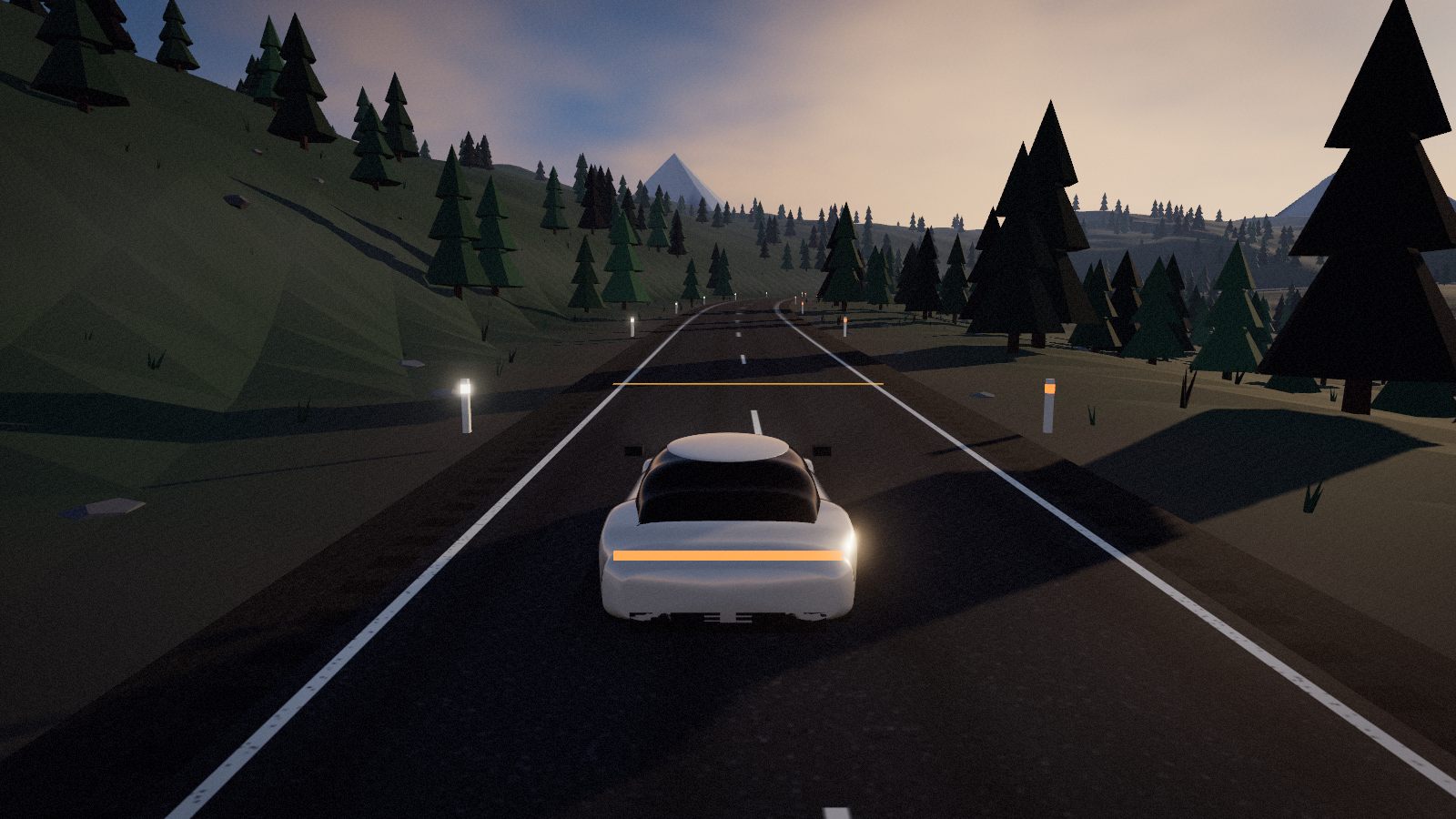
Every run scores out of 10,000. Four of the six disciplines are the Smooooth Operator app's own, scored by the very same code the app's server uses to score real drives — running in your browser. Two are game-only rules for sharing the road with traffic.
| Discipline | Weight | What it measures |
|---|---|---|
| Smoothness | 38% | How gently you brake, accelerate and turn, and how little jerk there is between them. The coffee cup on the dash spills when you go past what the scorer counts as smooth. |
| Control | 20% | Consistency: braking and cornering the same way each time, without see-sawing corrections. |
| Pace | 16% | How close you stay to the road's calm reference pace. Arriving sooner scores lower — see below. |
| Lane game only | 11% | Keeping to your lane, signalling before every lane change, starting an overtake only across a dashed centre line, and not cutting corners across the centre line or riding the edge line. |
| Speed limits | 8% | Staying at or under the posted limit. In the app this discipline is called Legal. |
| Traffic game only | 7% | A two-second gap to the car ahead, no overtaking into oncoming traffic, no cutting back in close, and no contact. |
Smoothness, control, pace and speed limits are computed by the app's own scoring code, unchanged. On real roads the app scores just those four: smoothness 45%, control 25%, pace 20% and legal 10%. The game re-weights them to make room for Lane and Traffic.
Medals need a clean run: no leaving the road and no contact with another car. Leave the road, or press R to be put back on it, and the run is still scored and shown — it just can't earn a medal. A real collision ends the run.
Pace: finishing sooner never scores higher
Before you drive, a calm driver drives the road, empty of traffic, and sets its reference pace. Pace compares your drive time with that reference: full marks anywhere from the reference to about a third slower, a steep fall the sooner you arrive, and a gentle fade if you take much longer. It is scoring input, never a target, and the game never puts a clock on screen for you to chase. The needle on the dash reads hurried, calm or slow.
Hurried. Arriving sooner than the road's calm reference pace drops pace to 5,000 of 10,000 — and hurrying usually costs smoothness and control as well.
In the app: 1,000 of 2,000 pace pointsIn the game: 800 of 1,600
| Your drive time | × reference | Pace score |
|---|---|---|
| 25% sooner, or more | 0.75× | 1,000 |
| 10% sooner | 0.9× | 5,000 |
| On the reference pace | 1.0× | 10,000 |
| 35% longer | 1.35× | 10,000 |
| 80% longer | 1.8× | 7,000 |
| Two and a half times as long | 2.5× | 4,000 |
| Four times as long, or more | 4.0× | 1,000 |
Between those points the score moves in straight lines. There is no point on the curve where arriving sooner pays — and in both the app and the game, speeding costs you again under the speed-limit discipline.
Traffic never costs you pace. Any time slower traffic holds you up is added to the reference, so waiting patiently behind a truck costs nothing — and a legal overtake gains nothing.
Ghosts and medals
A ghost is a recorded drive you can drive alongside. In the game you can pick one of these before you set off:
- The medal ghosts. Every day, three medal drivers drive the road with the same controls you have. Bronze is in a hurry: it brakes late, speeds, and arrives first. Silver sits in between. Gold is calm and arrives last of the three — and the scorer ranks them in exactly the reverse of the order they arrive. Score at least as much as a medal ghost on a clean run — no leaving the road, no contact — to earn its medal. Medal ghosts always drive the Smooooth GT.
- Your best. Your best run of the day becomes a ghost of its own.
- A friend's ghost. Share your card and the link carries your drive with it. Whoever opens it drives the same road alongside your ghost. Your ghost carries the car you drove. Their browser re-drives your inputs and checks the score in the link, so a shared score is checked, not just claimed — a doctored link is marked with ⚠.
Comparisons along the road are made in score, never in seconds.
Ghosts in the app are different. On real roads, a ghost is a record of a drive that has already finished — compared after you park, never a GPS trace, and never shown against you while the car is moving.
Traffic and lanes
The daily road isn't empty. There are slower cars going your way and oncoming cars in the other lane — light traffic some days, moderate or busy on others — and two disciplines, Lane (11%) and Traffic (7%), score how well you share the road with them.
Keep to your lane
Each day's road keeps either left or right, decided by the date like the landscape and the weather. Keep to your lane: don't cut corners across the centre line, and don't ride the edge line.
Signal every lane change
Indicate before you change lanes — Q and E on a keyboard, the bumpers on a controller, or the indicator buttons on screen.
Dashed or solid
Where the centre line is dashed, you may start an overtake when the road ahead is clear. Never start one across a solid line — finishing one you began legally is fine. Never overtake into oncoming traffic: if an oncoming car is under about three seconds away, stay where you are. And when you pull back in, don't cut in close in front of the car you passed.
The two-second rule
Keep at least two seconds behind the car ahead: when it passes a marker post, you should take two seconds or more to reach the same post. Closing that gap costs Traffic points.
No contact
Any touch costs points and rules out a medal. A real hit ends the run.
Patience is free
Time spent held up behind slower traffic is added to the road's reference pace, so waiting costs nothing — and a legal overtake gains nothing.
The garage
The garage holds 50 cars: 49 real production models from 33 makers, and the house Smooooth GT. Every car runs the same vehicle model — a dynamic bicycle model at 100 Hz with a saturating tyre curve, load transfer, a gearbox, traction control, stability control and ABS — fed with its own figures: mass, power and torque curve, drive layout, weight split, gearing, tyres, drag and brakes.
The medal ghosts and the road's reference pace are always driven in the Smooooth GT, so a medal means the same in a city hatchback as in a supercar. A quicker car doesn't help: pace still peaks at the calm reference pace. A ghost you share carries the car you drove.
Names describe the real production car each physics model approximates. Smooooth Operator is not affiliated with, sponsored by or endorsed by any manufacturer, and no logos or badges are reproduced.
Controls
- Keyboard. Arrow keys or WASD for gas, brake and steering (hold the brake at a stop to reverse); Q and E for the indicators. R puts you back on the road, C changes the camera and Esc pauses. The game page lists every key.
- Gamepad. Left stick steers, right trigger for gas, left trigger to brake, bumpers for the indicators.
- Touch. Phones and tablets, in landscape or portrait: hold the phone like a wheel and turn it to steer, with the brake under your left thumb (hold it at a stop to reverse), the gas under your right and the indicators above the brake. Prefer a thumb? Pick Slide or Buttons on the road card; tilt sensitivity is in Settings. Add the game to your Home Screen to play full screen.
The pedals are progressive — a tap is gentle, a hold is strong — and lifting off the gas eases off the way a foot does. The smoothest drivers barely touch the brake.
The game and the app
Same idea, same scoring engine — but one is a game and one is real life. The daily road is make-believe you play in a browser; the app scores the drives you actually make.
| Today's road (game) | Smooooth Operator (iPhone app) | |
|---|---|---|
| Where | In your browser, on fictional generated roads. | On your iPhone, on real public roads. |
| Scored by | The app's scoring code running in your browser, plus Lane and Traffic. | Our server, which recomputes and verifies every run. |
| Disciplines | Six: smoothness 38%, control 20%, pace 16%, lane 11%, speed limits 8%, traffic 7%. | Four: smoothness 45%, control 25%, pace 20%, legal 10%. |
| On screen while driving | A game HUD: speed, the limit, the pace needle, the cup and your progress. | Course progress only. No clock, no rival, no score. |
| Ghosts | Driven alongside you: medal ghosts, your best, a friend's link. | Records of finished drives, compared after you park. |
| Account | None. Progress stays in your browser. | Optional sign-in, for leaderboards and friends. |
The daily road is a game. It is set on fictional roads, it is not driving instruction, and nothing in it is a suggestion for how to drive in the real world. On real roads the app never shows a clock or a rival while you drive, and you never interact with it while the car is moving.
What the game keeps
The daily road needs no account and asks for nothing personal. Your settings, your best run of each day and your streak are kept in your browser's local storage and never sent to us. A shared ghost — and the sync link that carries your progress to another device — travels after the # in its link, which browsers don't send to any server. The privacy policy has the details.